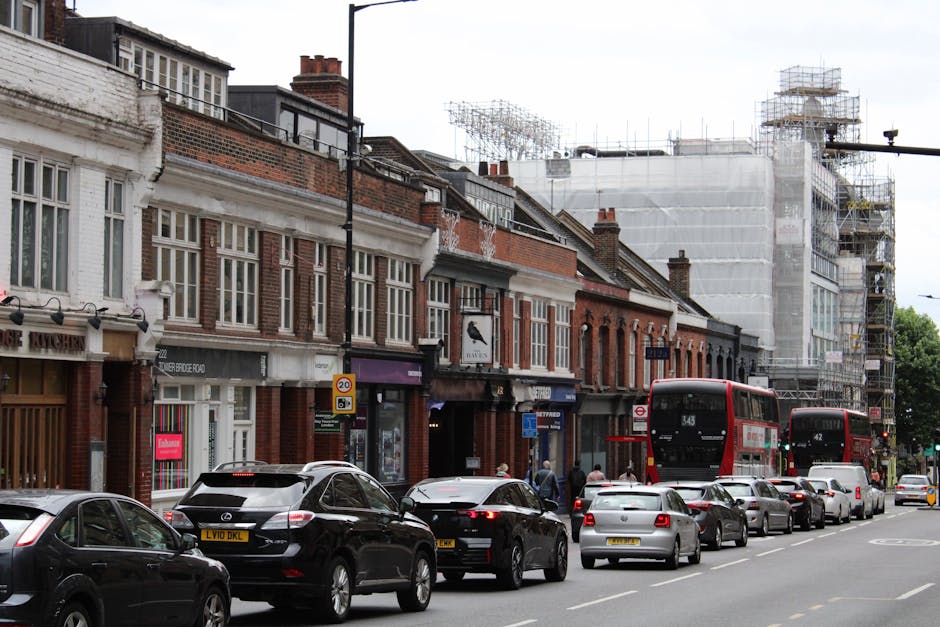
House removals on Clapham Road Stockwell parking solutions

Moving house on Clapham Road in Stockwell sounds straightforward until you remember the parking. One minute you are packing the last mug, the next you are staring at a busy South London street wondering where the van can stop without creating a scene. That is exactly why House removals on Clapham Road Stockwell parking solutions matter so much: they keep the move legal, efficient, and far less stressful.
If you have ever tried to juggle boxes, neighbours, traffic, and a removal vehicle all at once, you will know how quickly a small access problem can become the whole day. This guide breaks down how parking solutions work, what to plan for, where the common headaches appear, and how to make the moving day feel a lot calmer. We will also look at practical options, local best practice, and the kind of details people usually forget until the lorry is already outside.
Why House removals on Clapham Road Stockwell parking solutions Matters
Clapham Road sits in a part of London where traffic is rarely shy, and parking space can be tight even on a decent day. Add a house move, and suddenly you need more than just boxes and a van. You need a plan for where the vehicle will stop, how long it can stay, whether the driver can load safely, and how to avoid causing delays for everyone else on the street.
Parking solutions matter because they affect almost every part of the move:
- how close the van can get to the property
- how far your furniture must be carried
- how long loading and unloading will take
- whether the move stays within permitted stopping rules
- how much stress the driver and household feel on the day
To be fair, the actual lifting is often the easy part. It is the access that makes or breaks the timetable. A sofa that has to be carried half a street away takes time. A mattress that has to be angled around parked cars takes even more. And if the van cannot park safely, the rest of the day starts wobbling.
That is why local knowledge is useful. A good removals team should think about parking, loading bays, road width, turning space, and the practical realities of a London street before anyone starts carrying boxes downstairs. If you are arranging a larger home move, it is also worth checking related services such as house removals and home moves so the plan matches the scale of your property and your schedule.
How House removals on Clapham Road Stockwell parking solutions Works
At its simplest, the process is about matching the vehicle, timing, and street conditions to the move. In a busy Stockwell setting, that usually means deciding where the van will stand, when it can stand there, and how loading will happen without blocking neighbours or slowing the job.
Most practical parking solutions fall into a few broad steps:
- Assess the street - check whether the property has outside space, a loading area, or only on-street parking.
- Measure the access - think about narrow kerbs, railings, low branches, or steps that might affect the carry distance.
- Choose the right vehicle - sometimes a smaller removal van is easier than a larger truck, especially on tighter roads.
- Time the move carefully - early starts and midweek slots can be easier than peak commuter hours, though every street has its own rhythm.
- Coordinate the loading point - keep it clear, make it visible, and avoid last-minute confusion.
In real life, this is often a mix of planning and flexibility. One household may have a perfect bay outside the building. Another may need the van to stop a little further away while furniture is ferried out in stages. That is normal. The key is not pretending parking is a small detail when it is actually the central issue.
For some moves, a man and van setup is enough. For larger or more complex moves, a bigger vehicle or more structured support from removal services may be better. The right choice depends on volume, access, and how much lifting you want to take on yourself.
Key Benefits and Practical Advantages
Good parking planning does more than keep the council happy. It changes the whole mood of the day. Sounds a bit dramatic, but it is true.
Here are the main advantages:
- Faster loading and unloading - less carrying distance means less time and less fatigue.
- Lower risk of damage - fewer trips across pavements and kerbs reduces the chance of scuffs, dropped items, or strained backs.
- Cleaner coordination - everyone knows where the van is going to stand, so the move feels more organised.
- Better neighbour relations - nobody wants to be that household causing a street standstill at 8am.
- Less unnecessary cost - delays can push a move beyond the original timetable, especially where vehicle access is awkward.
There is also a psychological benefit that people underestimate. When the parking is sorted, the move feels under control. You can concentrate on the actual transition: the kettle, the bedding, the keys, the first night box. That first cup of tea in the new place tastes better when you have not spent the morning arguing with a blind corner and a row of parked hatchbacks.
If your move involves specialist items, the benefit is even clearer. Heavy or awkward furniture usually needs a more direct route. In those cases, furniture removals can help reduce the strain, and for high-value or unusually shaped items, a service such as piano removals may be the more sensible route.
Who This Is For and When It Makes Sense
This topic is not just for people moving out of a terrace house near Clapham Road. It applies to anyone whose move depends on street access, time-limited stopping, or a van that cannot simply pull into a driveway and sit there.
It makes particular sense for:
- families moving from houses with restricted on-street parking
- flat residents whose building has no private loading space
- landlords arranging tenant changeovers
- people moving bulky furniture in or out of tightly parked streets
- households with a limited moving window, such as completion day moves
- students and first-time movers who do not yet know the local parking patterns
It also matters if you are splitting the move into stages. Maybe you are taking some items to storage first, then the rest to the new property. In that case, parking has to work twice, not once. A nearby storage option can be useful, but only if the vehicle can load efficiently on both ends.
And yes, if your move is small enough, the parking issue may seem minor. But little moves can still get messy. A handful of boxes is fine until the van is forced to park three doors away in rain, and suddenly the "small job" is not so small. Funny how that happens.
Step-by-Step Guidance
Here is a practical way to handle parking for a house removal on Clapham Road in Stockwell.
- Survey the property access
Look at the road outside your home at the same time of day you expect to move. Morning traffic, school runs, delivery vans, and resident parking can all change the picture. If the street is already tight, plan accordingly. - Decide what needs to be parked where
Think about the removal vehicle, any personal cars, and whether neighbours may need temporary space to pass. One of the easiest mistakes is assuming a space will "just be free". That is rarely a safe assumption in London. - Match the vehicle size to the street
A smaller vehicle can often make life easier where manoeuvring is limited. For many local moves, a man with van arrangement gives more flexibility than trying to squeeze in a larger truck. - Plan the loading sequence
Place the biggest items near the exit, then the boxes, then fragile items. This reduces repeated trips and keeps the route clear. If you are packing yourself, the service information on packing and boxes can help you think in a more structured way. - Prepare the doorway and hallway
Keep shoes, prams, recycling, and random clutter out of the path. It sounds obvious, but the hallway is where time disappears. - Leave a margin for delays
Street parking, lift access, and narrow stairwells can add time. Build in some breathing room so the day does not feel rushed from the first ten minutes. - Confirm the plan with the mover
Before the day, make sure everyone understands the access point, likely parking position, and backup plan if the road is unexpectedly busy.
That last step is the one people skip most often. A quick conversation can save a surprising amount of friction later. In practice, it is often the difference between "smooth enough" and "why is the van there?"
Expert Tips for Better Results
Here are the tips that tend to matter most on real moving days, not just on paper.
- Go lighter on assumptions. If you have not personally checked the street, treat your parking plan as provisional.
- Use the shortest carry route possible. Even a few extra metres matter when you are moving wardrobes, box after box, or a heavy sofa.
- Keep essentials separate. The tea, chargers, documents, medications, and a basic toolkit should stay easy to reach. No one wants to dig through sealed boxes looking for the only kettle lead.
- Protect floor surfaces. Hallways and entrances take a beating during a move. A little protection can save a lot of frustration later.
- Think about neighbours. A polite knock or a quiet note, where appropriate, can prevent avoidable tension.
- Choose timing with care. If you have any flexibility, avoid the most congested periods. Even a 30-minute shift can help.
Expert summary: the best parking solution is rarely the most complicated one. It is the one that reduces carry distance, keeps everyone safe, and avoids unnecessary stopping or repositioning. Simple. Not always easy, but simple.
If the move is large or time-sensitive, you may want the added structure of house removalists or even a broader removal companies comparison. That way, you are looking at the full service picture, not just the vehicle.
Common Mistakes to Avoid
Parking issues tend to come from predictable mistakes. The good news is that most are avoidable.
- Waiting until moving day to think about parking - by then, options are already limited.
- Using the wrong vehicle size - too big can be awkward; too small can mean extra trips.
- Ignoring loading time - parking is not just about stopping the van. It is about how long the van needs to stay there.
- Blocking bins, crossings, or access points - even briefly, this can create conflict or safety issues.
- Forgetting about flat residents and shared entrances - communal areas need a little extra care and planning.
- Assuming a driver will know the street automatically - local knowledge helps, but each property is different.
The sneakiest mistake is probably trying to save time by rushing the first half hour. That is usually when people leave boxes half-packed, misplace keys, or discover the mattress cannot fit through the doorway as currently arranged. Small errors, big impact.
If the move is tied to a tenancy end or a completion deadline, the margin for error shrinks fast. That is where same-day removals can be useful, but only if parking and loading are properly thought through from the start.
Tools, Resources and Recommendations
You do not need a bag full of specialist kit, but a few things make a real difference.
| Tool or resource | Why it helps | Best used for |
|---|---|---|
| Boxes in mixed sizes | Makes stacking and carrying easier | General household moves |
| Labels and marker pens | Saves time at the unload | Room-by-room sorting |
| Protective blankets | Reduces scuffs and knocks | Furniture and fragile items |
| Trolley or sack truck | Speeds up heavier loads | Repeated carry routes |
| Phone notes / moving list | Keeps the day organised | Timing, key items, contacts |
Beyond the physical kit, think about service fit. A short-distance move with a few bulky pieces may be better handled by man with a van. A more structured household relocation may be better suited to full removals support. If you are unsure, the sensible move is to compare the job size to the service level, not the other way around.
For secure payment and peace of mind around booking, it is also worth reviewing payment and security and, where needed, the wider insurance and safety information. Those pages matter more than most people expect, especially on a busy move day.
Law, Compliance, Standards, or Best Practice
Parking and loading in London should always be handled with care and in line with local restrictions. The exact rules can vary by street, time, and permit arrangements, so it is safest to treat anything on-street as something that needs checking before the vehicle arrives. Do not assume a space is automatically usable just because it looks empty.
Best practice usually means:
- not obstructing traffic or pedestrian access
- allowing enough room for doors, visibility, and safe lifting
- respecting any resident permit or loading restrictions that apply locally
- planning for safe manual handling, especially with heavy furniture
- using insured, well-maintained equipment and sensible loading methods
In the removals industry, safety is not a side note. It is central. Proper lifting technique, secure packing, and sensible vehicle positioning all reduce risk. If you want to understand a mover's approach in more detail, their health and safety policy is a useful place to look, alongside the general terms and conditions.
There is also a sustainability angle that often gets missed. Less driving around looking for parking, fewer wasted trips, and better load planning all support more efficient moving. If that matters to you, the company's recycling and sustainability approach is worth a glance. Not glamorous, but practical.
Options, Methods, or Comparison Table
Different moves call for different parking approaches. Here is a simple comparison to help you think it through.
| Method | Best for | Pros | Limitations |
|---|---|---|---|
| Outside-the-property loading | Homes with usable frontage or clear access | Shortest carry distance, faster turnaround | May not be available on busy roads |
| Nearby legal parking with short carry | Tight streets with limited stopping space | More realistic in dense residential areas | Extra walking and more time needed |
| Smaller vehicle access | Restricted roads or awkward turning space | Easier manoeuvring, often less stress | May require more careful load planning |
| Split-load move | Larger homes or multi-stop relocations | Helps manage volume and access issues | Needs stronger coordination and timing |
For many Stockwell households, the most realistic approach is not the "perfect" one, but the one that keeps the move moving. A smaller van, a sensible stop point, and a well-packed load can beat an overambitious plan almost every time. Truth be told, moving is full of these little trade-offs.
Case Study or Real-World Example
Here is a typical scenario. A family moves out of a two-storey house near Clapham Road into another part of London. The street outside is busy in the morning, with resident parking on both sides and regular delivery traffic. There is no private driveway, and the family has a mix of wardrobes, framed pictures, boxes, and a few awkward items that really do not enjoy being carried far.
The first step is to treat parking as the central planning issue. The movers arrive with a vehicle sized for the street, and the loading point is chosen where it causes the least disruption while still keeping the carry route short. Essentials are packed separately, the exit path is cleared, and the big furniture is loaded first so there is no reshuffling later. The move is not magical. It still takes effort. But there is no pointless wandering about, no last-minute panic, and no van circling the block while someone tries to "just find a space".
That sort of move usually goes more smoothly because the team has already thought about access before the first box hits the floor. It is a small thing, really. Yet it changes everything.
For families wanting a broader service wraparound, this is also where packing and unpacking services can make a big difference, especially when time is tight and the new place needs to feel liveable quickly.
Practical Checklist
Use this checklist before moving day. A quick run-through can save hours later.
- Have you checked the street outside the property at roughly the same time of day as the move?
- Do you know where the van will stop and how long it can reasonably stay there?
- Have you considered whether a smaller vehicle would be easier than a larger one?
- Are the main walkways inside the house clear?
- Are fragile items packed and labelled?
- Have you set aside essentials for the first day and first night?
- Do you know whether any communal access rules apply?
- Have you discussed the plan with your movers?
- Are there any heavy items needing special handling?
- Do you have a backup plan if the nearest space is occupied?
Practical summary: if you handle parking early, the rest of the move usually behaves itself better. Not always perfectly, but better. And in removals, "better" is often a pretty good win.
Conclusion
House removals on Clapham Road Stockwell parking solutions are really about control, timing, and realism. If you plan the parking properly, you reduce stress, shorten carry times, and give yourself a much cleaner moving day. That matters whether you are moving a whole house, a smaller flat, or a few heavy pieces that need careful handling.
The best approach is usually the one that fits the street, the property, and the people doing the lifting. Keep things simple, stay flexible, and do not leave parking to chance. A calm move is rarely accidental.
If you are comparing support options, reviewing service details, or preparing for a tight move window, now is a good time to look at the practical side of the job and choose the help that fits your situation best.
Get a free quote today and see how much you can save.
Frequently Asked Questions
What are the best parking solutions for house removals on Clapham Road in Stockwell?
The best solution is usually the one that keeps the van as close as possible while staying practical and lawful for the street. That may mean using a smaller vehicle, choosing an early moving slot, or planning a short carry from a nearby space if the frontage is busy.
Do I need to arrange parking before moving day?
Yes, ideally. Even if you are not booking a formal bay, you should still know how the vehicle will stop, where loading will happen, and what the fallback option is if the first spot is taken.
Is a removal van better than a larger truck on Clapham Road?
Often, yes, especially where the street is narrow or parking is tight. A smaller van can be easier to place and may reduce disruption. For some larger moves, though, a bigger vehicle still makes sense if access allows it.
How do parking issues affect the cost of a house move?
Parking can affect cost indirectly by changing loading time and the amount of carrying required. If the van has to park further away or keep repositioning, the job may take longer. That is why access planning matters so much.
Can movers help me decide the best parking setup?
Yes. Experienced movers usually look at access, road width, vehicle size, and loading time together. It is worth giving them the full picture rather than just saying the property has "some parking nearby".
What if my street is always full?
Then the plan needs to be built around that reality. A smaller vehicle, a quieter time of day, or a short-carry loading approach may be the most realistic option. Sometimes the smart move is not forcing a perfect parking spot.
Are parking solutions different for flats and houses?
They can be. Flats may involve communal entrances, shared access, or tighter loading areas, while houses may have longer frontages but still no private space. In both cases, the route from door to van matters.
Should I pack differently if parking is difficult?
Yes, it helps to be more organised. Use sturdy boxes, label them clearly, and keep essential items separate. If the carry route is long, neat packing becomes even more important because no one wants boxes splitting halfway up the pavement.
What happens if the van cannot stop right outside?
The move can still go ahead, but the team may need to carry items from a nearby legal space. That usually adds time, which is why it is better to plan for this possibility from the start rather than treating it as a surprise.
Is it worth using storage during a parking-heavy move?
Sometimes, yes. If the full move is awkward to complete in one go, temporary storage can ease the pressure. It gives you room to split the job into stages, which can be very useful when street access is limited.
How do I avoid upsetting neighbours during a moving day?
Keep the route tidy, avoid blocking access points, work efficiently, and give a polite heads-up where appropriate. Most people are reasonable when they can see the move is being handled properly.
What should I ask before booking a mover for Clapham Road?
Ask about vehicle size, parking approach, loading time, insurance, and what they recommend for your particular property. If you are moving a full household, also ask whether house removals or a lighter-touch service would suit you better.